

India’s national parks protect an astonishing range of landscapes. Himalayan valleys, central Indian forests, Western Ghats rainforests, desert grasslands, mangrove islands and Brahmaputra floodplains shelter tigers, lions, rhinoceroses, elephants, snow leopards and thousands of lesser-known species.
The parks are also changing. Wildlife monitoring is becoming more technology-driven, while conservation increasingly depends on corridors outside park boundaries. Climate pressure, roads, crowding and conflict between people and wildlife remain serious challenges.
India officially has 106 national parks in the latest national database. We have prepared the Top 10 National Parks in India for 2026 by considering wildlife importance, biodiversity, conservation value, national reputation and the quality of the visitor experience.
1. Jim Corbett National Park – Uttarakhand
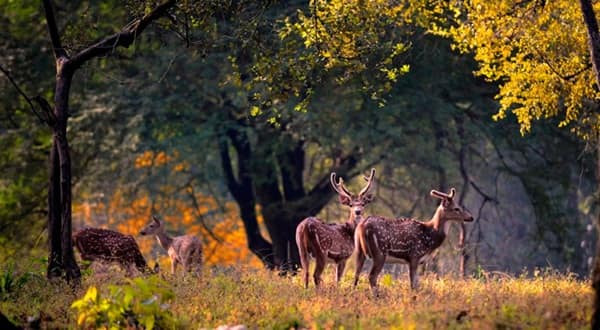
Jim Corbett National Park takes the No. 1 position as India’s most iconic all-round wildlife destination.
Established in 1936, it is the country’s first national park. Its setting at the Himalayan foothills combines sal forest, grassland, river belts and the Ramganga reservoir, creating habitat for Bengal tigers, Asian elephants, deer, gharials and an exceptional variety of birds.
Corbett’s tourism zones offer distinct experiences, from the grasslands of Dhikala to the forests of Bijrani. A safari can feel rewarding even when its most famous animals remain hidden.
Its conservation history, accessibility and public recognition keep Corbett at the centre of Indian wildlife tourism.
What makes it stand out: India’s oldest national park and one of its most complete combinations of scenery, wildlife and safari heritage.
2. Kaziranga National Park – Assam
Kaziranga National Park is one of Asia’s greatest conservation success stories and the world’s leading stronghold for the greater one-horned rhinoceros.
This UNESCO World Heritage Site protects part of the Brahmaputra Valley floodplain. Elephant grass, wetlands, woodland and river channels support rhinoceroses, tigers, wild water buffalo, elephants, swamp deer and rich birdlife.
Kaziranga feels different from India’s dry-forest tiger parks. Rhinos and buffalo may appear in open grasslands while waterbirds gather around wetlands.
Annual floods are essential to the ecosystem, although they also make safe movement towards the Karbi Anglong hills vital for wildlife.
What makes it stand out: Globally important rhinoceros conservation and a spectacular floodplain ecosystem filled with large mammals.
3. Ranthambore National Park – Rajasthan
Ranthambore National Park offers one of India’s most dramatic combinations of wildlife, landscape and history.
Dry deciduous forest surrounds lakes, rocky ridges and the imposing Ranthambore Fort. Tigers are the headline attraction, but leopards, sloth bears, sambar, chital, crocodiles and many bird species share the landscape.
Its open terrain and water bodies can produce memorable tiger sightings. Ruins, gateways and stone pavilions give the park a character unlike any other major tiger destination.
Ranthambore is extremely popular, so advance planning and realistic expectations are important. Its appeal extends beyond a single sighting.
What makes it stand out: A cinematic tiger landscape where lakes, ancient ruins and forest create an unforgettable sense of place.
4. Gir National Park – Gujarat
Gir National Park protects the only wild population of Asiatic lions in their natural habitat.
The wider Gir landscape mixes dry forest, scrub, grassland and seasonal rivers. It also supports leopards, chital, sambar, nilgai, crocodiles and abundant birdlife.
The Asiatic lion was once pushed close to extinction. Protection and community tolerance helped the population recover and expand beyond the park’s core.
Safaris are controlled by permit, and the principal tourism zone normally closes during the monsoon.
What makes it stand out: The only place on Earth where visitors can encounter wild Asiatic lions in their original landscape.
5. Kanha National Park – Madhya Pradesh
Kanha National Park is often regarded as the classic central Indian wilderness.
Spread across the Maikal Hills, Kanha combines sal and bamboo forest with broad grassy meadows. Tigers, leopards, wild dogs, gaur and deer inhabit the park, while the hard-ground barasingha has become its most important conservation symbol.
The recovery of this rare swamp deer from a dangerously small population is a notable species-restoration achievement. Visitors also value Kanha for its expansive views and sense of a functioning ecosystem.
Its wildlife experience is balanced rather than dependent on tiger sightings alone.
What makes it stand out: Beautiful meadows, excellent habitat management and the celebrated recovery of the hard-ground barasingha.
6. Bandhavgarh National Park – Madhya Pradesh
Bandhavgarh National Park is one of India’s most famous destinations for tiger-focused safaris.
Its compact core contains forest, bamboo, marshy meadows, sandstone hills and traces of an ancient past. Leopards, sloth bears, gaur, deer and many birds share the tiger habitat.
Bandhavgarh’s dramatic terrain and famous individual tigers attract photographers. The hilltop fort, caves and stone sculpture add a historical layer.
Tourism pressure requires careful management, but the park remains a compelling introduction to central India’s tiger country.
What makes it stand out: Strong tiger appeal within a compact, photogenic landscape shaped by hills, meadows and ancient ruins.
7. Sundarbans National Park – West Bengal
Sundarbans National Park protects a wild tidal world unlike any other national park in India.
Part of a vast mangrove system in the Ganges-Brahmaputra-Meghna delta, this UNESCO World Heritage Site is crossed by creeks, mudflats and islands. Tigers live alongside spotted deer, fishing cats, crocodiles, dolphins and waterbirds.
Exploration is mainly by boat and is more about reading the landscape than pursuing close sightings. Mudbanks, breathing roots and changing tides create the atmosphere.
Sea-level rise, cyclones, salinity and human-wildlife conflict make the Sundarbans one of India’s most important climate-sensitive conservation landscapes.
What makes it stand out: The world’s largest mangrove setting and a rare population of tigers adapted to a tidal environment.
8. Periyar National Park – Kerala
Periyar National Park offers one of India’s most varied and community-oriented nature experiences.
Set around Periyar Lake in the southern Western Ghats, the landscape includes evergreen forest, moist deciduous woodland and grassland. Elephants, tigers, gaur, sambar, Nilgiri langurs, giant squirrels and hornbills live here.
Visitors can explore by boat, guided nature walk, bamboo raft or protection-linked trek. Several activities involve local people, connecting tourism with livelihoods and conservation.
Periyar is especially rewarding for travellers who want to explore beyond a conventional jeep safari.
What makes it stand out: Western Ghats biodiversity combined with lake-based wildlife viewing and strong community-led ecotourism.
9. Bandipur National Park – Karnataka
Bandipur National Park is a vital part of one of southern India’s largest connected wildlife landscapes.
In the Nilgiri Biosphere Reserve, Bandipur adjoins protected forests in Karnataka, Kerala and Tamil Nadu. This allows tigers, elephants, wild dogs and gaur to move across a much larger ecosystem.
Deciduous forests, clearings and the Western Ghats backdrop make the park scenic. Its accessible location also means roads and traffic require strict wildlife safeguards.
Bandipur’s real importance lies in connectivity as much as in individual sightings.
What makes it stand out: A beautiful tiger-and-elephant reserve at the heart of the ecologically connected Nilgiri landscape.
10. Hemis National Park – Ladakh
Hemis National Park completes the top ten as India’s premier high-altitude wilderness.
Across Ladakh’s cold desert mountains, Hemis protects steep valleys and alpine terrain. Snow leopards share it with bharal, ibex, Tibetan wolves and other high-altitude wildlife.
Hemis is not a drive-through safari park. Wildlife watching often involves winter conditions, patient scanning, local guides and demanding travel at altitude.
The reward is an immersive experience in one of India’s largest and most remote national parks, where conservation is linked with village communities.
What makes it stand out: India’s finest snow-leopard landscape and a rare chance to experience Himalayan wildlife on its own terms.
What Is Changing in India’s National Parks in 2026?
India’s national parks are becoming more important as conservation areas and managed public destinations.
Technology-led protection: Camera traps, digital patrol systems and landscape mapping are improving wildlife monitoring and enforcement.
Corridor conservation: Greater attention is being placed on routes that connect parks, because tigers, elephants and other animals frequently move beyond protected boundaries.
Responsible tourism: Timed permits, zone controls, trained guides and limits on visitor vehicles are increasingly important at popular parks.
Community participation: Local guides, homestays and ecotourism programmes can connect conservation with income for people living near forests.
Climate pressure: Floods, fires, drought, cyclones, changing vegetation and rising temperatures are influencing how protected areas must be managed.
Broader wildlife interest: Visitors are increasingly looking beyond tigers towards birds, reptiles, landscapes, nature trails and conservation stories.
National Parks Worth Watching
Several outstanding parks sit just outside this top ten.
Great Himalayan National Park in Himachal Pradesh protects dramatic mountain habitats and is a UNESCO World Heritage Site.
Keoladeo National Park in Rajasthan is one of India’s best-known wetlands and an exceptional destination for birdwatching.
Valley of Flowers National Park in Uttarakhand is celebrated for alpine meadows, seasonal blooms and Himalayan scenery.
Namdapha National Park in Arunachal Pradesh protects a vast elevation range and extraordinary eastern Himalayan biodiversity.
Desert National Park in Rajasthan represents the Thar ecosystem and remains critical for the endangered Great Indian Bustard.
Final Word
India’s national parks in 2026 show the scale of the country’s natural diversity. Jim Corbett leads as the strongest all-round wildlife destination, while Kaziranga, Gir and the Sundarbans protect ecosystems of global importance.
Ranthambore, Kanha and Bandhavgarh define the classic tiger-safari experience, Periyar and Bandipur reveal the richness of the Western Ghats, and Hemis extends the story into the high Himalayas. The best park ultimately depends on whether a traveller values iconic animals, rare habitats, photography, birdlife or quiet immersion in the wild.