

On a bad pollution day, a city can seem to lose its colour. The sky turns grey, distant buildings disappear behind haze and even a short walk beside a busy road can leave the throat feeling dry. For millions of Indians, this is not limited to a few winter mornings. Fine-particle pollution has become a recurring problem across industrial towns, rapidly growing suburbs and some of the country’s biggest urban regions.
Delhi may be the name most closely associated with India’s air-pollution crisis, but the latest figures show that several smaller towns are breathing even dirtier air. Loni in Uttar Pradesh now sits at the top, while Byrnihat on the Assam-Meghalaya border continues to struggle with heavy industrial pollution. Cities across the National Capital Region and parts of West Bengal and Punjab also appear high on the list.
We have prepared the Top 10 Most Polluted City in India 2026 using the latest complete annual PM2.5 figures available in 2026. Let’s check out the places facing the country’s highest fine-particle pollution levels and understand why their air remains so difficult to clean.
1. Loni, Uttar Pradesh – PM2.5: 112.5 µg/m³
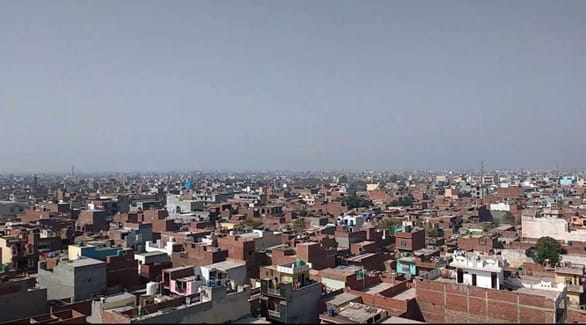
Loni, in Ghaziabad district on the edge of Delhi, is the most polluted city in India in the latest annual figures. Its average PM2.5 concentration reached 112.5 micrograms per cubic metre, more than 22 times the World Health Organization’s annual guideline of 5 µg/m³.
The town sits inside the wider Delhi-NCR pollution belt, where several sources overlap. Heavy traffic, diesel vehicles, construction activity, road dust, small industrial units and local fuel burning all add particles to the air. Dry weather can lift dust repeatedly from roads and open surfaces, while winter conditions trap pollution close to the ground.
Loni’s position is especially worrying because it is not a giant metropolis. Its rise to the top shows that India’s air-quality crisis can be even more severe in rapidly urbanising satellite towns where dense settlement, industry and traffic grow faster than environmental infrastructure.
2. Byrnihat, Meghalaya-Assam Border – PM2.5: 101.1 µg/m³
Byrnihat recorded an annual PM2.5 concentration of 101.1 µg/m³, placing it second in India. The industrial town lies on the border of Meghalaya and Assam, only a short distance from Guwahati.
Factories are a major part of Byrnihat’s economy, and the surrounding industrial belt includes cement, steel, ferro-alloy and other manufacturing units. Heavy diesel trucks also move through the area, while road dust and construction add to the particulate load. The town’s terrain can make the problem worse by slowing the dispersal of polluted air.
Byrnihat has attracted national attention because such severe pollution seems surprising in a region otherwise known for green hills and heavy rainfall. Its experience shows that industrial concentration can create a serious pollution hotspot even outside India’s largest metropolitan regions.
3. Delhi – PM2.5: 99.6 µg/m³
Delhi recorded an annual average PM2.5 concentration of 99.6 µg/m³, making it the third most polluted city in India and one of the most polluted major cities in the world.
Its air problem comes from many sources rather than one single cause. Vehicle exhaust, construction and road dust, industrial emissions, waste burning and household fuel use all contribute. During autumn and winter, smoke from crop-residue burning in neighbouring states can add to the pollution already produced within the region.
Weather plays a major role as well. Low wind speeds and temperature inversions during winter can hold polluted air close to the surface for days. The result is the familiar thick smog that can reduce visibility, disrupt travel and push air-quality levels into dangerous categories.
4. Ghaziabad, Uttar Pradesh – PM2.5: 89.2 µg/m³
Ghaziabad is another major Delhi-NCR pollution hotspot, with an annual PM2.5 concentration of 89.2 µg/m³.
The city combines dense residential development with industrial areas, busy highways and constant movement of freight and passenger vehicles. Construction activity and resuspended road dust add further particulate pollution, especially during dry months.
Ghaziabad’s location means its air cannot be separated from the rest of NCR. Pollution moves across municipal boundaries between Delhi, Noida, Loni, Ghaziabad and neighbouring districts. This is why local action alone is rarely enough; cleaner air requires coordinated measures across the entire region.
5. Ula, West Bengal – PM2.5: 86.8 µg/m³
Ula, also known as Birnagar, in West Bengal recorded an annual PM2.5 concentration of 86.8 µg/m³, placing it fifth in India.
Its appearance this high in the list is important because Ula is far smaller and less internationally known than Delhi or Ghaziabad. The wider lower-Gangetic region faces a mixture of emissions from road traffic, household and commercial fuel burning, brick kilns, waste burning, construction and pollution transported from surrounding areas.
Smaller towns often receive less public attention than megacities even when their pollution levels are extremely high. Ula’s position shows why air-quality monitoring and pollution control need to reach beyond the most famous urban centres.
6. Mullanpur Dhaka, Punjab – PM2.5: 86.2 µg/m³
Mullanpur Dhaka in Punjab recorded an annual PM2.5 concentration of 86.2 µg/m³, placing it sixth among India’s most polluted cities.
Punjab’s air changes sharply with the seasons. Agricultural activity is an important part of the regional economy, and crop-residue burning during certain periods can add large amounts of smoke to the atmosphere. Road traffic, local industries, dust and domestic fuel use also contribute to year-round pollution.
Winter weather can make these emissions more difficult to disperse, allowing fine particles to build up near the surface. Mullanpur Dhaka’s high annual reading shows that air pollution in Punjab is not only a short-lived stubble-burning story but a broader problem involving several sources.
7. Madhyamgram, West Bengal – PM2.5: 83.3 µg/m³
Madhyamgram, part of the northern Kolkata metropolitan belt, recorded an annual PM2.5 concentration of 83.3 µg/m³.
Rapid urban growth has transformed the area, bringing more housing, vehicles, construction and commercial activity. The wider Kolkata region also faces emissions from industry, diesel transport, road dust, waste burning and solid-fuel use.
Because Madhyamgram is part of a continuous urban corridor, pollution generated in one municipality can easily affect neighbouring areas. Its high position demonstrates that the air-quality problem around Kolkata extends well beyond the central city and into fast-growing suburban zones.
8. New Delhi – PM2.5: 82.2 µg/m³
New Delhi recorded an annual PM2.5 concentration of 82.2 µg/m³. It is listed separately from the wider Delhi urban area and remains the world’s most polluted national capital.
The sources are broadly similar to those affecting the wider capital region: road traffic, construction dust, fuel combustion, industry, waste burning and seasonal pollution moving in from neighbouring states. Dense development and high traffic volumes keep background pollution elevated even outside severe winter episodes.
Although the annual figure improved compared with the previous year, it remains far above healthy levels. The distinction between New Delhi and Delhi can sometimes confuse readers, but both measurements point to the same larger reality – the capital region continues to face extremely serious air-pollution pressure.
9. Noida, Uttar Pradesh – PM2.5: 80.5 µg/m³
Noida recorded an annual average PM2.5 concentration of 80.5 µg/m³, keeping it among India’s ten most polluted cities.
The city has grown rapidly into a major residential, office and industrial centre. New roads, high-rise construction, commercial projects and constant traffic have increased pressure on air quality. Dust from construction sites and roads becomes particularly noticeable in dry weather.
Noida also shares the same regional air as Delhi and Ghaziabad, so local emissions combine with pollution moving across NCR. Stronger dust control, cleaner transport, industrial enforcement and better regional coordination are all important if the city is to bring down its long-term pollution level.
10. Greater Noida, Uttar Pradesh – PM2.5: 77.2 µg/m³
Greater Noida completes the Top 10 with an annual PM2.5 concentration of 77.2 µg/m³.
Its wide roads and planned sectors can give the impression of a less polluted city, but the surrounding region has seen huge construction, industrial development and growth in vehicle movement. Open land and construction zones can generate large amounts of dust, while nearby industrial and transport corridors contribute additional emissions.
Like Noida, Greater Noida is part of the broader NCR airshed. Its pollution therefore reflects both local development and regional conditions. The city’s inclusion means six of the ten places in this list are located in or closely linked with northern India’s heavily polluted urban belt.
Why Is Air Pollution So Severe in Many Indian Cities?
India’s worst pollution usually comes from several sources acting together. Vehicles, factories, coal and other fuel combustion, brick kilns, construction, road dust, waste burning and household fuels can all add particles to the air. In agricultural regions, seasonal crop-residue burning can create another major spike.
Weather then decides how quickly those pollutants can escape. Rain and strong winds can clean the air temporarily, while dry conditions increase dust. During winter, calm winds and temperature inversions often trap pollutants close to the surface across northern India.
PM2.5 is particularly concerning because the particles are extremely small. They can travel deep into the lungs and are linked with serious long-term health risks. The World Health Organization recommends an annual PM2.5 level of only 5 µg/m³, while every city in this Top 10 recorded an average more than 15 times higher.
Final Word
The 2026 picture of India’s most polluted cities shows that the problem is no longer represented by Delhi alone. Loni has moved to the top, Byrnihat remains an extreme industrial hotspot, and smaller places such as Ula and Mullanpur Dhaka now appear alongside the familiar NCR cities.
The concentration of Loni, Delhi, Ghaziabad, New Delhi, Noida and Greater Noida in the same Top 10 also shows that pollution moves across city borders. Cleaner air will require action on transport, industry, construction dust, waste and fuel burning across entire regions rather than isolated measures in one municipality.