

India’s higher-education system operates on a scale few countries can match. Some universities educate students on a single residential campus, while others supervise hundreds of affiliated colleges or deliver degrees to learners spread across entire states. At the extreme end is IGNOU, whose distance-learning network is so large that it is regularly described as the biggest university in the world by enrollment.
The word “biggest” can mean campus area, number of colleges, budget or student population. For this ranking, student enrollment and the overall academic network are the main measures. This means open universities and large affiliating universities naturally dominate because they can educate hundreds of thousands—or even millions—of students without placing everyone on one physical campus.
Enrollment figures should be treated as approximate because universities count regular students, distance learners and affiliated-college students differently. The ranking therefore reflects the best available 2026 picture rather than claiming a single government-issued live league table.
Let’s check out the top 10 list of the biggest universities in India in 2026.
1. Indira Gandhi National Open University – More Than 4 Million Learners
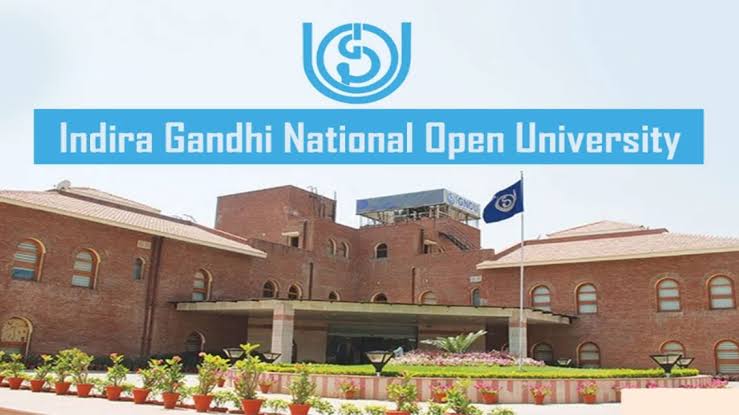
Indira Gandhi National Open University, better known as IGNOU, is comfortably the biggest university in India by student reach.
Established in New Delhi in 1985, IGNOU was created to make higher education available to people who could not attend conventional universities. Today, it operates through regional centres, learner-support centres and digital platforms across India and also serves students overseas.
Depending on the enrollment measure and period used, recent international compilations place IGNOU’s overall learner base at more than 4 million, with some broader cumulative figures exceeding 7 million registrations.
IGNOU offers undergraduate, postgraduate, diploma, certificate and doctoral programmes in subjects ranging from arts and commerce to management, science, education, social work and computer applications.
Its greatest strength is accessibility. Working professionals, rural students, homemakers and learners living far from major universities can pursue recognised qualifications without relocating.
Why it is so big: A nationwide open-learning system rather than a conventional campus-only model.
2. Savitribai Phule Pune University – Around 6.5 Lakh Students
Savitribai Phule Pune University, or SPPU, is one of India’s largest conventional affiliating university systems.
The university is headquartered on a roughly 411-acre campus in Pune but its true scale comes from the hundreds of colleges affiliated with it across the region.
SPPU has more than 700 affiliated colleges and institutions, covering arts, commerce, science, engineering, management and professional education.
Widely cited enrollment estimates place the wider university network at approximately 6.5 lakh students.
Its academic influence extends far beyond the central campus, which is why Pune is often called one of India’s most important education hubs. SPPU is also widely known as part of the academic ecosystem that gave Pune the nickname “Oxford of the East.”
Why it is so big: Hundreds of affiliated colleges combined with a major postgraduate and research university.
3. Chaudhary Charan Singh University – More Than 5.25 Lakh Students
Chaudhary Charan Singh University, located in Meerut, Uttar Pradesh, operates one of the largest affiliated-college networks in northern India.
The university itself officially states that its network includes more than 700 aided, government and self-financing colleges and institutions, serving over 5.25 lakh students.
Its main residential campus covers approximately 222 acres and includes academic departments, research laboratories, sports facilities, hostels and professional institutes.
CCSU serves a vast population across western Uttar Pradesh and offers education in arts, science, commerce, law, agriculture, engineering, management and several professional disciplines.
The enormous number of affiliated colleges rather than the relatively modest number of students studying directly on the Meerut campus explains its position among India’s largest universities.
Why it is so big: One of the country’s biggest affiliated-college systems.
4. University of Mumbai – Around 5.5 Lakh Students
The University of Mumbai is not only one of India’s oldest universities but also one of its largest.
Founded in 1857, it has grown alongside Mumbai and the wider Maharashtra region into an enormous affiliating institution.
Approximately 5.5 lakh students study through the wider University of Mumbai system, which includes hundreds of affiliated colleges along with university departments and institutes.
Courses range from arts, commerce and science to law, management, engineering, technology and interdisciplinary research.
Mumbai’s enormous population and position as India’s financial and commercial capital naturally create huge demand for higher education.
The university also operates multiple campuses and specialised academic centres rather than functioning as a single compact institution.
Why it is so big: A huge metropolitan student population supported by hundreds of affiliated colleges.
5. University of Delhi – Around 4 Lakh or More Students
The University of Delhi, commonly called DU, is one of India’s most recognised public universities and also one of its largest by total student reach.
DU operates through numerous highly regarded colleges including Hindu College, Miranda House, St. Stephen’s College, Shri Ram College of Commerce and Lady Shri Ram College.
However, a major part of its enormous enrollment comes from the School of Open Learning, or SOL, which allows students to pursue University of Delhi degrees through flexible learning.
SOL alone has been associated with a learner population running into several lakh students, while DU’s regular colleges, postgraduate departments and Non-Collegiate Women’s Education Board add further numbers.
The combination makes the wider Delhi University system one of India’s largest academic communities.
DU also attracts students from virtually every part of India because of its reputation, comparatively affordable fees and extensive range of undergraduate and postgraduate programmes.
Why it is so big: A combination of major regular colleges and one of India’s largest university open-learning systems.
6. Yashwantrao Chavan Maharashtra Open University – Several Lakh Learners
Yashwantrao Chavan Maharashtra Open University, or YCMOU, is another giant of India’s open and distance-learning system.
Established in Nashik in 1989, it serves learners across Maharashtra through regional centres and a very large network of learner-support centres.
Recent university reporting illustrates its enormous scale. In 2024–25 alone, the BA Marathi-medium programme reported more than 2.27 lakh admissions, while B.Com recorded more than 93,000 learners. Science, management, library science and other programmes add substantially to the total.
YCMOU specialises in flexible education for students who may be employed, living in rural regions or unable to attend a conventional university.
Its courses cover humanities, commerce, science, agriculture, education, management and vocational subjects.
Why it is so big: High-volume distance education across Maharashtra supported by hundreds of study centres.
7. Osmania University – Around 3 Lakh Students Across Its Network
Osmania University in Hyderabad is one of India’s most historic and extensive state university systems.
Founded in 1918, the university has developed into a major institution with a large central campus alongside hundreds of affiliated colleges.
The wider Osmania University network has commonly been associated with approximately 3 lakh students, although the exact number changes as affiliations and annual admissions change.
Its academic offerings cover arts, science, commerce, engineering, technology, law, management and several professional fields.
Osmania is particularly important to the higher-education system of Telangana and has educated generations of students across Hyderabad and surrounding districts.
Its historic main campus is substantial, but as with many universities on this list, the affiliated-college network is what pushes total student numbers into the hundreds of thousands.
Why it is so big: A century-old university combined with an extensive Telangana college network.
8. University of Calicut – More Than 2 Lakh Students Across Its Network
The University of Calicut is one of the largest university systems in Kerala.
Established in 1968, it serves a large part of northern Kerala and has hundreds of affiliated colleges covering districts such as Kozhikode, Malappuram, Palakkad, Thrissur and Wayanad.
The university’s scale comes principally from undergraduate students studying in its affiliated colleges rather than from the number of learners physically present on the main campus.
Courses include arts, science, commerce, management, education, law and several professional disciplines.
Kerala’s exceptionally high participation in education has helped institutions such as Calicut University develop extremely large student networks.
Its School of Distance Education further expands access for people unable to attend regular college programmes.
Why it is so big: Hundreds of affiliated colleges serving one of India’s most education-intensive states.
9. Annamalai University – More Than 1 Lakh Students and Distance Learners
Annamalai University, located at Annamalainagar in Tamil Nadu, has historically been one of India’s largest universities by student reach.
Established in 1929, it developed as a major residential university offering programmes in arts, science, engineering, agriculture, medicine, education and other disciplines.
Annamalai became particularly famous for its Directorate of Distance Education, which greatly expanded its learner population beyond the main campus.
The university has gone through significant regulatory and administrative changes over the years, so older enrollment claims of several lakh students should not automatically be treated as its current active enrollment.
Even with those changes, the combination of regular programmes, professional courses and approved distance education keeps Annamalai among India’s larger university systems.
Why it is so big: A broad multidisciplinary university with a long-established distance-education tradition.
10. Dr. B.R. Ambedkar Open University – More Than 1 Lakh Active Learners
Dr. B.R. Ambedkar Open University, headquartered in Hyderabad, completes the top ten.
Established in 1982 as Andhra Pradesh Open University, it was the first open university in India and was later renamed after Dr. B.R. Ambedkar.
The university serves students primarily through open and distance learning. Recent higher-education datasets place its active student population at more than 1.2 lakh, while broader historical estimates of its reach have been considerably higher.
BRAOU operates through regional coordination centres and study centres, making undergraduate and postgraduate education accessible across Telangana and neighbouring regions.
Its programmes include BA, B.Com, B.Sc, MA, M.Com, MBA, education and several diploma and professional courses.
Its importance lies not only in size but in its pioneering role in creating India’s state-level open-university model.
Why it is so big: A large distance-learning system serving students who cannot easily access regular higher education.
What Makes India’s Biggest Universities So Large?
India’s largest universities reach extraordinary numbers of students because they operate very differently from a traditional residential campus.
Open and distance learning: IGNOU and YCMOU can teach students across enormous geographical areas without requiring them to move to one campus.
Affiliated colleges: SPPU, Mumbai University and CCSU supervise hundreds of colleges, meaning students studying many kilometres away are still part of the university system.
Large population: Universities in Maharashtra, Uttar Pradesh, Delhi, Telangana and Kerala serve regions containing tens of millions of potential students.
Affordable education: Public universities generally charge considerably lower fees than many private institutions, increasing accessibility.
Wide range of courses: Large universities offer everything from humanities and commerce to engineering, law, science and management.
Flexible admission models: Open universities make higher education possible for working adults and students who cannot attend daily classes.
Regional study centres: Instead of concentrating infrastructure in one location, distance universities create networks of learner-support centres.
Biggest by Enrollment Is Not the Same as Biggest Campus
One important distinction is that IGNOU is India’s biggest university by student enrollment, but it is not India’s largest university by physical land area.
Agricultural universities often occupy much larger campuses because they require farms, research fields and experimental facilities. Universities such as G.B. Pant University of Agriculture and Technology have historically controlled thousands of acres of land.
Therefore, a ranking based purely on campus area would look completely different from this enrollment-based list.
Final Word
India’s largest universities demonstrate how higher education can operate on an extraordinary scale. IGNOU stands far ahead of every other institution because its open-learning model reaches millions of learners, while Savitribai Phule Pune University, Chaudhary Charan Singh University and the University of Mumbai manage enormous networks of affiliated colleges.
Together, these universities show that “big” in Indian higher education does not necessarily mean one giant campus. In many cases, it means a university whose classrooms, colleges and study centres are spread across an entire state—or across the whole country.