

India’s billionaire club has entered a remarkable new era. Telecom networks serving hundreds of millions of users, giant ports, steel plants, vaccine factories, supermarkets, banks and pharmaceutical companies have created fortunes that now compete with those of the wealthiest business families anywhere in the world.
What makes the 2026 ranking especially interesting is how quickly these fortunes can change. A movement in the share price of Reliance Industries, Adani Group companies or another listed business can add or erase billions of dollars within days. The race for the top is therefore constantly moving even when the names remain familiar.
The ranking below uses the latest Forbes real-time billionaire estimates available at the end of August 2026, rather than the fixed annual Forbes Billionaires snapshot released earlier in the year. Net worth is an estimate of assets minus liabilities and can rise or fall daily with stock markets, private-company valuations and exchange rates.
Let’s check out the top 10 list of the richest people in India in 2026.
1. Mukesh Ambani – Net Worth: Around $88.1 Billion
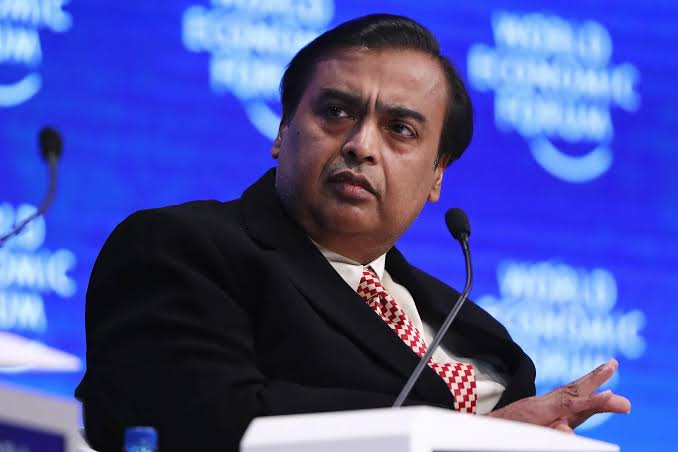
Mukesh Ambani remains the richest person in India in the latest 2026 ranking, with an estimated fortune of approximately $88.1 billion.
Ambani is chairman and managing director of Reliance Industries, one of India’s largest business groups. What began as a textile business under his father, Dhirubhai Ambani, has grown into an empire spanning oil and petrochemicals, telecommunications, retail, media, financial services and digital technology.
One of the biggest transformations came through Reliance Jio. The telecom business dramatically reduced mobile-data prices in India and has grown to more than 500 million subscribers, turning Reliance into one of the country’s most important digital companies.
Reliance Retail is another enormous part of the group, with operations across supermarkets, fashion, electronics and e-commerce. Ambani is also investing heavily in renewable energy, batteries, green hydrogen and other technologies intended to reduce Reliance’s long-term dependence on fossil fuels.
Although his fortune has moved significantly during 2026, Ambani remains India’s wealthiest billionaire at the latest count.
2. Gautam Adani – Net Worth: Around $79.5 Billion
Gautam Adani ranks second with an estimated net worth of approximately $79.5 billion.
Adani founded the Adani Group as a commodities-trading company in 1988 and transformed it into one of India’s largest infrastructure conglomerates.
Today, the group operates across ports, airports, electricity generation and transmission, renewable energy, cement, logistics and other infrastructure businesses.
Mundra Port in Gujarat became one of the foundations of the Adani empire, while the group has also developed into India’s largest private airport operator.
Adani’s fortune has been particularly volatile because much of it is tied to publicly traded Adani Group companies. At different points in 2026, movements in group shares briefly pushed him ahead of Mukesh Ambani in the race to become Asia’s richest person.
Despite these fluctuations, his enormous infrastructure holdings keep him firmly in second position among India’s richest people.
3. Savitri Jindal & Family – Net Worth: Around $40.4 Billion
Savitri Jindal and family rank third with an estimated fortune of approximately $40.4 billion.
She chairs the O.P. Jindal Group, the industrial empire founded by her late husband Om Prakash Jindal.
The family’s businesses are deeply involved in steel, power, cement and infrastructure. After O.P. Jindal’s death in 2005, different parts of the business were divided among the couple’s four sons.
One of the largest branches is overseen by Sajjan Jindal and includes JSW Steel, JSW Cement and other JSW businesses. Naveen Jindal is associated with Jindal Steel & Power.
The family has continued expanding into new areas, including electric mobility and cement. Its industrial assets have made Savitri Jindal not only one of India’s richest people but also one of the wealthiest women in the world.
4. Lakshmi Mittal – Net Worth: Around $34.1 Billion
Steel magnate Lakshmi Mittal ranks fourth with an estimated net worth of approximately $34.1 billion.
Mittal built his fortune by transforming a relatively small family steel background into a global industrial empire.
His defining business achievement came through the creation of Mittal Steel and its 2006 merger with European steel giant Arcelor. The resulting company, ArcelorMittal, became one of the world’s largest steel and mining groups.
The company operates across numerous countries and supplies steel to industries ranging from automobiles and construction to engineering and infrastructure.
Mittal serves as executive chairman, while his son Aditya Mittal is chief executive. His wealth rose sharply during 2026 as stronger business performance and market valuations boosted his holdings.
He also attracted attention in 2026 through an agreement, together with Adar Poonawalla, to acquire the Rajasthan Royals IPL franchise.
5. Shiv Nadar – Net Worth: Around $29.2 Billion
Technology pioneer Shiv Nadar ranks fifth with an estimated fortune of approximately $29.2 billion.
Nadar cofounded HCL in 1976 with a small group of partners, initially producing calculators and microprocessors. Over the following decades, the business evolved into one of India’s largest technology-services companies.
HCLTech now serves major corporate customers around the world and operates across areas including cloud computing, software development, cybersecurity, engineering and digital transformation.
Nadar stepped down as chairman and handed leadership to his daughter Roshni Nadar Malhotra, while remaining chairman emeritus and strategic adviser.
He is also one of India’s most prominent philanthropists. Through the Shiv Nadar Foundation, he has invested heavily in universities, schools and educational institutions.
His journey from an early Indian computer entrepreneur to one of the country’s richest people mirrors the extraordinary growth of India’s information-technology industry.
6. Cyrus Poonawalla – Net Worth: Around $28.6 Billion
Cyrus Poonawalla ranks sixth with an estimated fortune of approximately $28.6 billion.
His wealth comes primarily from the Serum Institute of India, which he founded in Pune in 1966.
Serum Institute developed into the world’s largest vaccine manufacturer by number of doses produced. It manufactures vaccines used against diseases including measles, polio, influenza and several other infections.
The company became even more internationally recognised during the COVID-19 pandemic, when it emerged as one of the world’s most important vaccine-production centres.
Poonawalla’s business interests also extend into financial services through holdings connected with Poonawalla Fincorp, while his family owns valuable real estate and other assets.
Unlike many billionaires whose fortunes depend mainly on listed companies, a large part of the Poonawalla family wealth comes from the privately held Serum Institute, making its valuation necessarily an estimate.
7. Dilip Shanghvi – Net Worth: Around $27.5 Billion
Dilip Shanghvi ranks seventh with an estimated net worth of approximately $27.5 billion.
His story began remarkably modestly. In 1983, Shanghvi borrowed a small amount from his father and started Sun Pharmaceutical Industries, initially focusing on medicines for psychiatric conditions.
Sun Pharma gradually expanded through organic growth and acquisitions, eventually becoming India’s most valuable listed pharmaceutical company.
One of its biggest moves came in 2014 when it acquired Ranbaxy Laboratories in a multibillion-dollar deal, dramatically increasing its international presence.
The company now earns a substantial share of its revenue outside India and has strong operations in the United States and other pharmaceutical markets.
Shanghvi’s fortune demonstrates how India’s pharmaceutical industry has evolved from a domestic generics business into a global healthcare force.
8. Kumar Mangalam Birla – Net Worth: Around $22.5 Billion
Kumar Mangalam Birla ranks eighth with an estimated fortune of approximately $22.5 billion.
He heads the Aditya Birla Group, one of India’s oldest and most diversified industrial conglomerates.
Birla took control of the family business at just 28 years old following the death of his father, Aditya Vikram Birla, in 1995. Under his leadership, the group expanded aggressively both within India and internationally.
Today, its businesses span cement, aluminium, chemicals, textiles, financial services, fashion, telecommunications, paints and other sectors.
Major companies associated with the group include UltraTech Cement, Hindalco Industries, Grasim Industries and Aditya Birla Capital.
The group operates across dozens of countries, with a significant proportion of its revenue generated outside India. Birla has also been expanding into newer consumer businesses including paints, jewellery and hospitality.
9. Radhakishan Damani – Net Worth: Around $14.8 Billion
Investor and retail entrepreneur Radhakishan Damani ranks ninth with an estimated net worth of approximately $14.8 billion.
Damani first built his reputation as one of India’s most respected stock-market investors before making an enormously successful move into organised retail.
He opened the first DMart store in Mumbai in 2002. His company, Avenue Supermarts, subsequently expanded DMart into one of India’s most successful supermarket chains.
The business follows a relatively simple strategy: tightly controlled costs, high inventory turnover, competitive pricing and ownership or long-term control of many store properties.
When Avenue Supermarts went public in 2017, the enormous market response dramatically increased Damani’s wealth.
He also owns stakes in several companies and has accumulated a significant real-estate portfolio, including valuable properties in Mumbai and other locations.
10. Uday Kotak – Net Worth: Around $13.9 Billion
Banker Uday Kotak completes the top ten with an estimated fortune of approximately $13.9 billion.
Kotak rejected the opportunity to join his family’s trading business and instead established a small finance company in 1985.
That business eventually evolved into Kotak Mahindra Bank, which received a banking licence in 2003 and developed into one of India’s leading private-sector banks.
The bank expanded further through the acquisition of ING Vysya Bank’s Indian operations and built businesses across retail banking, investment banking, wealth management, insurance and asset management.
Kotak stepped down as managing director and CEO in 2023 but remains closely associated with the institution as a major shareholder and non-executive director.
His journey from a small financial-services startup to one of India’s largest private banks has made him one of the country’s most successful self-made financial entrepreneurs.
What Makes India’s Richest People So Wealthy?
India’s richest billionaires built their fortunes across very different industries, but several common themes explain their extraordinary wealth.
Ownership of large businesses: Most billionaire wealth comes from shares in companies rather than salaries or cash holdings.
Telecom and digital growth: Reliance Jio demonstrates how rapidly digital businesses can create value when hundreds of millions of customers are involved.
Infrastructure: Ports, airports, energy and logistics have played a major role in building Gautam Adani’s fortune.
Industrial scale: Steel, cement, aluminium and energy continue to generate enormous wealth for families such as the Jindals, Mittals and Birlas.
Healthcare: Cyrus Poonawalla and Dilip Shanghvi show the global financial importance of India’s vaccine and pharmaceutical industries.
Technology: Shiv Nadar’s HCL fortune reflects India’s rise as a global IT-services powerhouse.
Consumer growth: Radhakishan Damani built billions by serving India’s expanding urban middle class through DMart.
Finance: Uday Kotak converted the growth of private banking and financial services into one of India’s largest personal fortunes.
Final Word
India’s wealthiest people represent the enormous transformation of the country’s economy. Their fortunes now come from everything from traditional steel and energy to telecom, software, vaccines, supermarkets and financial services.
As of the latest 2026 real-time estimates, Mukesh Ambani remains India’s richest person at around $88.1 billion, followed by Gautam Adani at roughly $79.5 billion. Savitri Jindal, Lakshmi Mittal and Shiv Nadar complete an exceptionally powerful top five, while rapidly changing stock prices ensure that India’s billionaire ranking never stays completely still for long.