
India’s monumental statues reflect far more than scale. Some commemorate national leaders, some honour poets and city founders, while others are rooted in Hindu, Jain or Buddhist traditions that have shaped Indian art for centuries. In recent decades, India has also become home to several record-breaking sculptures, including the world’s tallest statue and some of the largest religious figures ever constructed. A useful list of famous statues therefore has to look beyond height alone. Historical importance, cultural recognition, artistic identity, public visibility and continuing relevance all matter. The selections below range from a 10th-century granite monolith to vast 21st-century engineering projects. Let’s check out 10 famous statues in India in 2026 and the details that make each one significant.
1. Statue of Unity, Gujarat
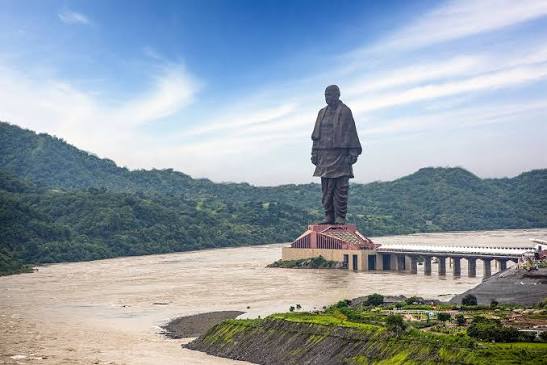
The Statue of Unity is India’s most ambitious monumental sculpture and the world’s tallest statue. Standing near Ekta Nagar (formerly Kevadia) in Gujarat’s Narmada district, it depicts Sardar Vallabhbhai Patel, India’s first Deputy Prime Minister and Home Minister. Sculptor Ram V. Sutar designed the monument, which was inaugurated on 31 October 2018, Patel’s birth anniversary. The figure is deliberately shown in a walking posture, dressed in the traditional dhoti and shawl closely associated with Patel. Its scale is not merely symbolic: the monument also contains exhibition spaces and a high viewing gallery, turning it into both a memorial and a major tourism complex.
- Height: 182 metres, or about 597 feet, making it the world’s tallest completed statue.
- Location: Ekta Nagar, Narmada district, Gujarat, close to the Sardar Sarovar Dam.
- Designer: Indian sculptor Ram V. Sutar; the height of 182 metres also corresponds to the number of seats in the Gujarat Legislative Assembly.
- Visitor feature: A viewing gallery at about 153 metres provides views of the Narmada, the dam and the surrounding hill ranges.
2. Statue of Belief, Nathdwara
The Statue of Belief, also known as Vishwas Swaroopam, is one of India’s most dramatic contemporary religious monuments. Located at Ganesh Tekri in Nathdwara, Rajasthan, it portrays Lord Shiva in a seated meditative form with a trident. The copper-toned surface and the figure’s enormous scale make it visible from far beyond the immediate complex. The project was conceived by the Miraj Group and executed with large-scale structural engineering rather than as a conventional solid sculpture. Public access, viewing levels and lighting have turned it into both a pilgrimage attraction and a modern landmark for Nathdwara.
- Height: About 369 feet (roughly 112 metres) including the monument’s pedestal.
- Location: Ganesh Tekri, Nathdwara, Rajsamand district, Rajasthan.
- Construction: Built with a structural frame, reinforced concrete and a metal-finished exterior; Shapoorji Pallonji was associated with construction.
- Distinction: Widely described as the world’s tallest statue of Lord Shiva.
3. Statue of Equality, Hyderabad
The Statue of Equality honours the 11th-century philosopher and theologian Sri Ramanujacharya, whose teachings emphasized devotion and spiritual equality. Located near Hyderabad, the monumental seated figure forms the visual centre of a much larger spiritual campus. The statue is surrounded by representations of 108 Divya Desams, the sacred Vishnu temples celebrated in the Sri Vaishnava tradition. Its design combines religious symbolism with modern monumental construction, making the site as important for its theological message as for its scale. The complex opened to the public in 2022 and has quickly become one of the best-known modern religious landmarks in India.
- Height: 216 feet, including the statue and its supporting base.
- Dedicated to: Sri Ramanujacharya, a major exponent of Vishishtadvaita philosophy.
- Complex feature: 108 Divya Desam shrine representations surround the monument.
- Setting: The principal statue rises above the Bhadravedi base structure, which also contains visitor and exhibition spaces.
4. Thiruvalluvar Statue, Kanyakumari
The Thiruvalluvar Statue at Kanyakumari is one of India’s most thoughtfully symbolic literary monuments. It honours the ancient Tamil poet and philosopher Thiruvalluvar, author of the Tirukkural. Standing on a rocky islet beside the Vivekananda Rock Memorial, the statue was created by sculptor V. Ganapathi Sthapathi and dedicated on 1 January 2000. Its proportions are tied directly to the structure of the Tirukkural, making the monument itself an interpretation of the text. The dramatic location at India’s southern tip, surrounded by the sea, has made the statue a defining image of Kanyakumari.
- Total height: 133 feet, representing the 133 chapters of the Tirukkural.
- Statue and pedestal: The figure is 95 feet high and stands on a 38-foot pedestal symbolizing the text’s chapters on virtue.
- Sculptor: V. Ganapathi Sthapathi.
- Location: On a small offshore rock at Kanyakumari, Tamil Nadu, close to the Vivekananda Rock Memorial.
5. Adiyogi, Coimbatore
Adiyogi at the Isha Yoga Center near Coimbatore is unlike most giant statues in India because it is designed as a colossal bust rather than a full standing or seated figure. The black steel sculpture represents Adiyogi, or Shiva as the first yogi in the yogic tradition. It was unveiled in 2017 and has since become one of the most recognizable contemporary spiritual images in India. The unusually broad face, flowing hair and simplified monumental form are designed for visual impact across a large open landscape. The number 112 is central to the concept, linking the statue’s height with yogic symbolism used by the Isha Foundation.
- Height: 112 feet.
- Material and scale: The bust is made from roughly 500 tonnes of steel and extends about 150 feet in length.
- Record: Recognized by Guinness World Records as the world’s largest bust sculpture.
- Location: Isha Yoga Center, near Coimbatore, Tamil Nadu.
6. Gommateshwara Bahubali, Shravanabelagola
The Gommateshwara statue at Shravanabelagola is far older than India’s modern mega-statues and remains one of the country’s greatest sculptural achievements. Carved from a single mass of granite on Vindhyagiri Hill, it represents Bahubali, a revered figure in Jain tradition. The statue was commissioned by the Ganga minister and general Chavundaraya and dates to 981 CE. Its calm expression, upright posture and unclothed form symbolize detachment, self-control and spiritual victory. The statue is also the focus of the Mahamastakabhisheka, a major ceremonial anointing traditionally held at long intervals.
- Height: About 58 feet (approximately 18 metres).
- Date: Erected in 981 CE, making it more than a thousand years old.
- Material: A single granite monolith, one of the world’s most famous free-standing monolithic statues.
- Religious significance: The Mahamastakabhisheka ceremony attracts very large numbers of Jain pilgrims; the next major event is scheduled for 2030.
7. Murudeshwar Shiva Statue, Karnataka
The giant Shiva statue at Murudeshwar is famous as much for its setting as for its size. It rises on Kanduka Hill beside the Arabian Sea, forming a striking visual pair with the towering Raja Gopura of the Murudeshwar Temple. Shiva is shown seated, overlooking the coast, and the silver-toned surface catches changing light through the day. The temple town is associated with the Atmalinga legend, giving the modern statue a strong connection with an older pilgrimage tradition. Seen from the beach or the elevated gopura, the sculpture has become one of the defining images of coastal Karnataka.
- Height: About 123 feet (roughly 37 metres).
- Location: Murudeshwar, Uttara Kannada district, Karnataka, on Kanduka Hill beside the Arabian Sea.
- Setting: The sea surrounds the temple promontory on three sides, giving the statue an unusually dramatic coastal backdrop.
- Nearby landmark: The Raja Gopura rises more than 200 feet and offers elevated views of the statue and coastline.
8. Statue of Prosperity, Bengaluru
The Statue of Prosperity in Bengaluru honours Nadaprabhu Kempegowda, the 16th-century founder associated with the planning and development of the city. Unveiled in November 2022 near Kempegowda International Airport, the monument was conceptualized and sculpted by Ram V. Sutar, who also designed the Statue of Unity. Unlike many religious mega-statues, this work functions primarily as a civic memorial linking a rapidly growing global city with its historical founder. Kempegowda is represented standing with a sword, giving the figure a formal and commanding presence.
- Height: 108 feet.
- Material: The project used about 98 tonnes of bronze and 120 tonnes of steel.
- Sculptor: Ram V. Sutar.
- Location: Near Kempegowda International Airport, Bengaluru, Karnataka.
9. Dhyana Buddha, Amaravati
The Dhyana Buddha at Amaravati reconnects a modern monument with one of ancient India’s great Buddhist centres. The 125-foot seated Buddha stands near the Krishna River in Andhra Pradesh in a meditation posture and is decorated with visual references to the famous Amaravati school of Buddhist art. The wider region once supported an important Buddhist mahachaitya and sculptural tradition, so the contemporary statue is not an isolated attraction but part of a much older cultural landscape. Its calm seated form and riverside setting give the site a markedly different character from the heroic civic monuments elsewhere on this list.
- Height: 125 feet (about 38 metres).
- Location: Amaravati, Andhra Pradesh, on the banks of the Krishna River.
- Artistic link: The complex uses motifs and reproductions inspired by the ancient Amaravati school of Buddhist sculpture.
- Symbolism: The supporting design incorporates Buddhist ideas such as the Noble Eightfold Path and the Four Noble Truths.
10. Paritala Anjaneya Statue, Andhra Pradesh
The Hanuman statue at Paritala near Vijayawada is one of the best-known giant representations of Hanuman in southern India. Installed in the early 2000s, the standing figure became widely recognized because its 135-foot scale was exceptional for a Hanuman statue at the time. The monument is part of a temple complex and is visible from the surrounding highway area, giving it the role of both devotional image and regional landmark. Although taller Hanuman statues have since been constructed elsewhere, Paritala remains one of the statues most frequently associated with the modern wave of colossal devotional sculpture in India.
- Height: About 135 feet.
- Location: Paritala, near Vijayawada in Andhra Pradesh.
- Opening: The statue was installed and opened in 2003.
- Significance: It was long cited among the tallest Hanuman statues and remains a prominent pilgrimage and roadside landmark.
What Makes These Statues Important in 2026
These statues represent several distinct traditions of public sculpture in India. The Statue of Unity and Statue of Prosperity use monumental scale to commemorate political and civic figures. The Thiruvalluvar Statue turns a literary text into architecture and symbolism. Adiyogi, the Statue of Equality, the Statue of Belief, Murudeshwar Shiva and the Paritala Anjaneya statue show how modern engineering has transformed religious sculpture into large public destinations. The Dhyana Buddha connects contemporary monument-building with Amaravati’s ancient Buddhist heritage, while Gommateshwara demonstrates that India’s fascination with colossal sacred sculpture is more than a thousand years old. Together, the ten statues show how memory, faith, regional identity, tourism and engineering can all shape the meaning of a public monument.
Conclusion
India’s famous statues are not memorable simply because they are large. Their importance comes from the stories they represent and the way people continue to interact with them. A 182-metre memorial to Sardar Patel, a thousand-year-old Jain monolith, a literary monument facing the sea and giant contemporary images of Shiva, Ramanujacharya, Buddha and Hanuman all belong to very different cultural settings. Yet each has become a visual landmark with meaning beyond its physical measurements. In 2026, these statues remain significant as pilgrimage centres, tourism destinations, engineering achievements and expressions of historical or regional identity. That combination of scale, symbolism and public recognition is what keeps them among the most famous statues in India.