

Walk through an Indian parking lot in 2026 and the changing car market is easy to see. Compact SUVs are everywhere, CNG has moved far beyond taxis, automatic gearboxes are now common in family cars, and buyers who once looked only at hatchbacks are considering everything from micro-SUVs to seven-seat MPVs. Yet a few models continue to rise above the noise because they combine price, mileage, space, features and resale value in a way Indian buyers understand immediately.
For this ranking, popularity is measured primarily through sales. The latest complete cumulative model-wise data available for calendar 2026 covers January to June, so the list uses H1 2026 sales rather than a single month’s result. Prices are current approximate ex-showroom ranges as available in August 2026 and can change by variant or location.
So, let’s check out the Top 10 Most Popular Cars in India 2026 and see which models are winning the strongest response from Indian buyers this year.
1. Maruti Suzuki Dzire – H1 2026 Sales: 1,26,204 Units
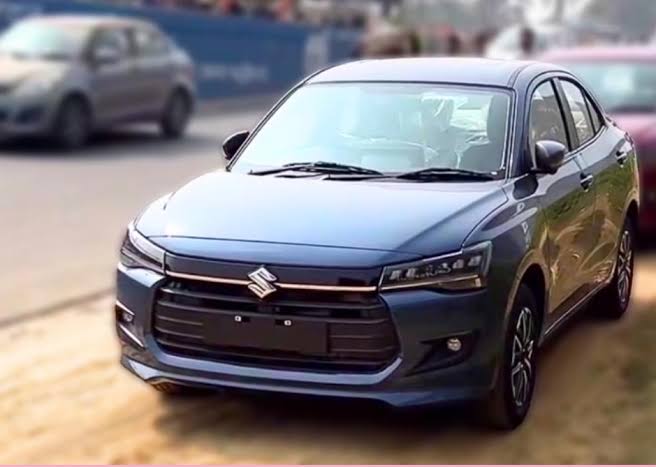
The Maruti Suzuki Dzire is India’s best-selling passenger vehicle in the first half of 2026, with 1,26,204 units sold between January and June. That is a remarkable achievement for a sedan in a market increasingly dominated by SUVs.
The latest Dzire starts at about Rs 6.31 lakh and goes up to around Rs 9.41 lakh ex-showroom. It uses a 1.2-litre petrol engine and is available with manual, AMT and factory-fitted CNG options. Claimed efficiency is one of its biggest strengths, especially for buyers who cover high monthly distances.
What keeps the Dzire popular is its balance. It is easy to drive in cities, offers a useful boot, has a wide Maruti service network and now carries much stronger safety credentials than older generations. The current model has also added features such as a touchscreen, wireless smartphone connectivity and, on higher variants, a 360-degree camera and sunroof.
2. Tata Punch – H1 2026 Sales: 1,19,303 Units
Tata Punch ranks second with 1,19,303 units sold in H1 2026. Its success shows how strongly Indian buyers have embraced small SUVs that are easy to park but still offer a high seating position and useful ground clearance.
The 2026 Punch starts at about Rs 5.70 lakh and extends to around Rs 10.67 lakh ex-showroom depending on variant and powertrain. Buyers can choose petrol, turbo-petrol and CNG versions, while selected variants offer an automatic gearbox.
The Punch works because it feels larger and tougher than a conventional entry-level hatchback without becoming difficult to use in crowded cities. Tata’s strong focus on safety, the tall driving position, practical boot design in the twin-cylinder CNG version and the wide spread of variants have made it attractive to first-time buyers as well as small families.
3. Tata Nexon – H1 2026 Sales: 1,18,166 Units
The Tata Nexon is only slightly behind the Punch, with 1,18,166 units sold during the first six months of 2026. It remains one of the strongest names in India’s compact-SUV segment.
Prices currently start at about Rs 7.37 lakh and rise to roughly Rs 14.32 lakh ex-showroom for the regular internal-combustion range. Petrol and diesel engines are offered, while the wider Nexon family also includes a popular electric version.
Safety has always been a major part of the Nexon’s appeal. The model combines a five-star crash-safety reputation with six airbags and electronic stability control on current variants. Buyers also get SUV-like ground clearance, a modern cabin, large displays on higher trims and a broad choice of transmissions. The result is a compact SUV that works for city commuting, family use and highway trips.
4. Maruti Suzuki Ertiga – H1 2026 Sales: 1,08,295 Units
Maruti Suzuki Ertiga is India’s most popular mainstream MPV and ranks fourth overall with 1,08,295 units sold in H1 2026.
The seven-seater currently costs about Rs 8.90 lakh to Rs 13.04 lakh ex-showroom. It is offered with a 1.5-litre petrol engine, manual and automatic gearboxes, and a factory-fitted CNG option on selected variants.
The Ertiga’s formula is straightforward: three rows of seating without the size or cost of a large SUV. Families appreciate the flexible cabin, rear AC vents and easy entry, while commercial and fleet buyers value Maruti’s service reach and the availability of CNG. Few vehicles in India combine seven-seat practicality and relatively manageable running costs as effectively.
5. Maruti Suzuki WagonR – H1 2026 Sales: 1,00,704 Units
The WagonR continues to prove that practical hatchbacks are far from finished. It sold 1,00,704 units in H1 2026, keeping it inside India’s top five.
Its ex-showroom price currently starts at around Rs 4.99 lakh and reaches about Rs 7.24 lakh. Buyers can choose 1.0-litre and 1.2-litre petrol engines, manual and AMT transmissions, and CNG versions for lower running costs.
The WagonR’s tall-boy design is its biggest advantage. It provides excellent headroom, easy ingress and egress and good outward visibility while occupying little road space. Low ownership costs and Maruti’s enormous dealer and service network add to the appeal. It may not be the most glamorous car in the Top 10, but its everyday usefulness keeps it selling in huge numbers.
6. Maruti Suzuki Swift – H1 2026 Sales: 97,747 Units
The Swift remains one of India’s most recognisable hatchbacks, with 97,747 units sold in the first half of 2026.
The current model is priced from about Rs 5.84 lakh to Rs 8.74 lakh ex-showroom. Its 1.2-litre petrol engine is available with manual and AMT gearboxes, while CNG variants cater to buyers focused on fuel costs.
What separates the Swift from more purely practical hatchbacks is its youthful image and light, easy-to-drive character. The latest generation also offers six airbags and modern infotainment across the range. Strong fuel economy, low maintenance costs and high resale demand make it especially attractive to young buyers and small urban families.
7. Maruti Suzuki Baleno – H1 2026 Sales: 96,996 Units
Maruti Suzuki Baleno sold 96,996 units in H1 2026 and remains one of India’s most successful premium hatchbacks.
The Baleno currently starts at about Rs 5.99 lakh and goes up to around Rs 9.47 lakh ex-showroom. It uses a 1.2-litre petrol engine with manual or AMT transmission, while factory-fitted CNG variants are also available.
Its popularity comes from offering noticeably more cabin width and refinement than entry-level hatchbacks while remaining efficient and easy to own. Higher variants add equipment such as a head-up display, 360-degree camera and 9-inch touchscreen. The Nexa retail experience and Maruti’s service reach also help the Baleno retain a wide customer base.
8. Maruti Suzuki Fronx – H1 2026 Sales: 95,441 Units
The Fronx has quickly become one of Maruti Suzuki’s most important newer models. It recorded 95,441 units in the first half of 2026.
Prices range from about Rs 6.85 lakh to Rs 11.84 lakh ex-showroom. Buyers can choose a 1.2-litre petrol engine, a more powerful 1.0-litre turbo-petrol and a CNG option, with manual, AMT and automatic transmissions depending on the engine.
The Fronx succeeds by combining the manageable footprint and efficiency of a hatchback with the styling cues buyers now expect from an SUV. It looks more rugged than the Baleno on which it is based, offers a higher seating feel and still remains relatively light and efficient. Its strong export performance also shows that the formula works beyond India.
9. Hyundai Creta – H1 2026 Sales: 91,391 Units
Hyundai Creta remains India’s best-selling midsize SUV, with 91,391 units sold in H1 2026. It ranks ninth overall but continues to dominate one of the country’s most competitive segments.
The Creta starts at about Rs 10.90 lakh and extends to around Rs 20.11 lakh ex-showroom. It offers three engine choices – 1.5-litre petrol, 1.5-litre diesel and 1.5-litre turbo-petrol – along with manual, IVT, conventional automatic and DCT gearboxes depending on the variant.
The Creta’s biggest strength is choice. Buyers can configure it as a relatively simple family SUV or as a feature-heavy premium model with a panoramic sunroof, ventilated seats, connected technology and Level 2 ADAS on higher trims. A comfortable ride, strong resale value and Hyundai’s wide service presence keep demand consistently high.
10. Mahindra Scorpio (Scorpio-N + Classic) – H1 2026 Sales: 89,375 Units
The Mahindra Scorpio family completes the Top 10 with 89,375 units sold in H1 2026. This sales figure combines the newer Scorpio-N and the continuing Scorpio Classic.
The Scorpio Classic is priced from about Rs 13.37 lakh to Rs 17.40 lakh ex-showroom, while the updated 2026 Scorpio-N ranges from roughly Rs 13.69 lakh to Rs 25.49 lakh. The Classic uses a diesel-manual setup, while the Scorpio-N offers petrol and diesel engines, manual and automatic gearboxes and 4WD on selected variants.
The Scorpio is popular for reasons very different from the hatchbacks higher on this list. Buyers want its rugged ladder-frame construction, commanding driving position, road presence and ability to handle rough conditions. The newer Scorpio-N adds more comfort, technology and safety, while the Classic continues to appeal to traditional Scorpio loyalists and buyers in smaller cities and rural markets.
Why Are These Cars So Popular in India?
The strongest-selling cars in India usually solve practical problems first. Fuel efficiency matters because many owners drive every day, while service reach and spare-parts availability can be more important over five or ten years than a long feature list. This is one reason Maruti Suzuki places five models in the H1 2026 Top 10.
SUV styling is another major force. Punch, Nexon, Fronx, Creta and Scorpio show that buyers increasingly prefer a higher seating position and tougher design. At the same time, Dzire, WagonR, Swift and Baleno prove that efficient sedans and hatchbacks still have enormous demand when the pricing and ownership equation is right.
CNG and automatic transmissions are also influencing purchase decisions. Several models in this list now offer factory-fitted CNG, AMT or conventional automatic options, allowing buyers to choose between lower running costs and easier city driving without changing to a different model.
Final Word
The first half of 2026 shows just how broad India’s car market has become. A compact sedan is No. 1, two Tata SUVs follow immediately behind, a seven-seat MPV sits fourth and familiar hatchbacks continue to sell in six-figure volumes. There is no single body style that wins every buyer.
Maruti Suzuki still dominates the list with five of the Top 10 models, but Tata’s Punch and Nexon are now among the strongest-selling vehicles in the country. Hyundai Creta remains the midsize-SUV benchmark, while Mahindra’s Scorpio family shows the continuing strength of rugged, body-on-frame SUVs. The final full-year 2026 order may change, but these H1 figures already show which cars have captured Indian buyers most strongly this year.