
India’s healthcare story has been shaped not only by large hospitals and new technology, but by doctors whose work changed how complex diseases are treated, how specialist care is delivered and how medical institutions are built. Some became known for difficult procedures and clinical innovation; others transformed cardiac care, gastroenterology, ophthalmology, respiratory medicine or public health. A few also created institutions that continue to influence healthcare far beyond their own practice. This list of famous doctors in India in 2026 focuses on physicians and surgeons with well-documented careers, major contributions, leadership roles and sustained public recognition. It is not an official ranking, because specialists from different fields cannot be judged on one common scale. Let’s check out 10 famous doctors in India in 2026 and understand why their work has had such a lasting impact on Indian healthcare.
1. Dr. Prathap C. Reddy
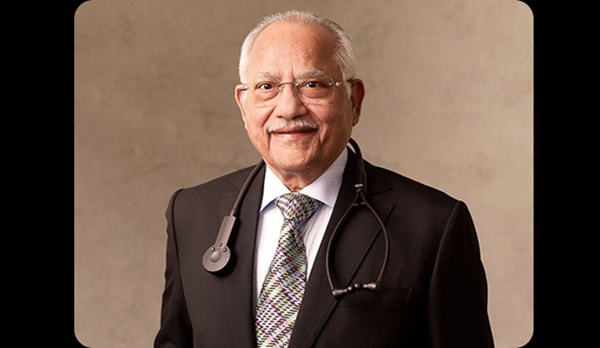
Dr. Prathap C. Reddy is one of the most influential figures in modern Indian healthcare. A cardiologist by training, he founded Apollo Hospitals in Chennai in 1983, when large private tertiary-care hospital networks were still uncommon in India. Apollo went on to build a broad system spanning hospitals, pharmacies, digital health and education. Dr. Reddy’s importance therefore extends beyond clinical cardiology. He is closely associated with the rise of organised private hospital care in India and with bringing advanced specialist treatment and medical technology into large domestic healthcare institutions.
2. Dr. Devi Prasad Shetty
Cardiac surgeon Dr. Devi Prasad Shetty is known for combining high-volume heart surgery with an emphasis on making specialist care more affordable. He is the founder and chairman of Narayana Health and remains associated with adult, paediatric and congenital cardiac surgery. His work has drawn attention for the scale at which heart-care services were developed and for his argument that efficiency and volume can help reduce treatment costs. Dr. Shetty’s influence also reaches hospital management and healthcare policy, but his public identity remains strongly rooted in cardiac surgery and healthcare innovation.
3. Dr. Naresh Trehan
Dr. Naresh Trehan is one of India’s best-known cardiovascular and cardiothoracic surgeons. After training in India and gaining advanced surgical experience in the United States, he returned to India and became closely associated with the development of modern cardiac surgery. He founded the Escorts Heart Institute and later Medanta – The Medicity, where he serves as chairman, managing director and chief cardiac surgeon. A Padma Shri and Padma Bhushan recipient, Dr. Trehan’s reputation combines decades of surgical experience with the creation of major institutions for complex cardiac and multidisciplinary care.
4. Dr. D. Nageshwar Reddy
Dr. D. Nageshwar Reddy is a leading gastroenterologist and an internationally recognised specialist in therapeutic endoscopy. As chairman and managing director of AIG Hospitals, he helped develop the Asian Institute of Gastroenterology in Hyderabad into a major referral centre for digestive diseases. His work covers advanced endoscopy, pancreatic and biliary procedures, research and medical training. The Government of India awarded him the Padma Vibhushan in 2025 for medicine. His standing comes from the combination of high-level clinical practice, research and institution building in gastroenterology.
5. Dr. Ashok Seth
Dr. Ashok Seth is a prominent interventional cardiologist associated with Fortis Escorts Heart Institute in New Delhi. His career has focused on catheter-based treatment of heart disease, including angioplasty and other minimally invasive procedures. Fortis credits him with helping introduce and develop several interventional cardiology techniques in India and the Asia-Pacific region. He has also been deeply involved in medical education and professional training. His long record in minimally invasive cardiac treatment has made him one of the most recognisable Indian specialists in interventional cardiology.
6. Dr. Gullapalli N. Rao
Ophthalmologist Dr. Gullapalli N. Rao is best known as the founder of the L V Prasad Eye Institute in Hyderabad, established in 1987 after his academic career in the United States. LVPEI developed as more than an eye hospital, combining clinical care, research, training, rehabilitation and services for underserved communities. Dr. Rao’s contribution is therefore tied both to ophthalmology and to the design of large-scale eye-care systems. His career shows how a specialist can influence public health through institution building as well as through individual patient care.
7. Dr. Randeep Guleria
Dr. Randeep Guleria became widely known during the COVID-19 period, but his medical career is rooted in pulmonary, critical-care and sleep medicine. He previously served as director of AIIMS New Delhi and helped develop pulmonary and sleep-medicine services there. He later joined Medanta, where he leads internal medicine and respiratory and sleep medicine and also directs the Medanta Medical School. A Padma Shri recipient, Dr. Guleria has combined respiratory medicine, medical education, public-health advisory work and clear communication with the general public.
8. Dr. Soumya Swaminathan
Dr. Soumya Swaminathan represents the research and public-health side of Indian medicine. A paediatrician and clinical scientist, she built much of her research career around tuberculosis and HIV before serving as Director General of the Indian Council of Medical Research and Secretary for Health Research. She later became the World Health Organization’s first Chief Scientist. Her influence comes from connecting clinical research with policy and large public-health programmes. Her career shows that a doctor’s impact can extend far beyond hospital practice into research systems, evidence-based policy and global health leadership.
9. Dr. Tejas M. Patel
Dr. Tejas Madhusudan Patel is a leading interventional cardiologist based in Ahmedabad and chairman and chief interventional cardiologist at the Apex Heart Institute. He is particularly known for advancing transradial procedures, in which coronary angiography and angioplasty are performed through the radial artery in the wrist. His work has attracted international attention, and he has held academic and visiting roles in India and the United States. The Government of India awarded him the Padma Bhushan in 2024 for medicine, recognising his contribution to interventional cardiology.
10. Dr. Arvind Kumar
Dr. Arvind Kumar is a thoracic surgeon known for minimally invasive and robotic surgery of the chest. At Medanta, he leads programmes covering thoracic surgery, chest oncology and lung transplantation. His work includes lung and oesophageal cancers, thymic disorders, tracheal disease and other complex chest conditions. Medanta reports that he has performed thousands of thoracic procedures, including many using keyhole and robotic techniques. His career reflects the growing importance of minimally invasive surgery in treating major chest diseases while reducing the need for large surgical incisions in selected patients.
What Makes a Doctor Famous in India?
Medical fame should not be confused with medical suitability. A doctor may be widely known because of a landmark procedure, decades of clinical work, research, hospital leadership or public communication. That does not make the same doctor right for every patient. Specialisation matters most: a gastroenterologist cannot be compared directly with a cardiac surgeon, ophthalmologist or pulmonologist. Lists like this are best used to understand influential medical careers, not as a substitute for choosing a specialist for a particular diagnosis.
What Patients Should Check Before Choosing a Doctor
Before booking a consultation, verify the doctor’s current hospital affiliation, specialty, professional registration and the condition they actually treat. For major surgery or procedures, patients can ask about the team’s experience, hospital facilities, alternatives, expected recovery and costs. It is also worth confirming whether the named senior doctor will personally conduct the consultation or procedure. Online reviews can provide practical clues, but qualifications, specialist expertise and a proper clinical assessment matter more. A second opinion can be useful before making a major treatment decision.
Conclusion
The famous doctors in India in 2026 come from very different branches of medicine. Prathap C. Reddy, Devi Shetty and Naresh Trehan helped shape major healthcare institutions, while D. Nageshwar Reddy, Ashok Seth, Tejas Patel and Arvind Kumar are closely associated with advanced specialist procedures. Gullapalli N. Rao transformed eye-care delivery, Randeep Guleria became a major voice in respiratory medicine and public health, and Soumya Swaminathan built an international career in research and health policy. Their careers show that medical influence can come through clinical excellence, innovation, teaching, research or institution building. For patients, however, the right choice is the appropriately qualified specialist for the condition at hand, not simply the most famous name.