

India’s churches are more than places of worship. Some preserve traditions linked with the earliest history of Christianity in the country, while others became major pilgrimage centres or outstanding examples of Portuguese and Gothic architecture. The tomb tradition of St. Thomas in Chennai, the relics of St. Francis Xavier in Old Goa and the huge pilgrimage gatherings at Velankanni give these churches importance far beyond their cities. Many also remain active institutions where annual feasts, processions and regular services continue alongside tourism and heritage conservation. This list looks at famous churches in India in 2026 based on religious significance, history, architecture, cultural recognition and continuing public relevance. Let’s check out the top 10 famous churches in India in 2026 and understand what makes each one special.
1. Basilica of Bom Jesus, Goa
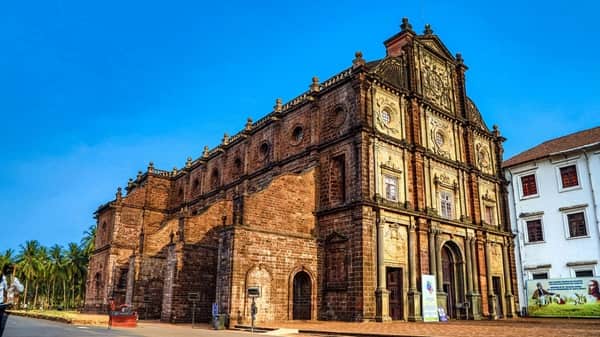
The Basilica of Bom Jesus in Old Goa is one of India’s most internationally recognised churches. Built by the Jesuits in the late 16th century, it forms part of the UNESCO-listed Churches and Convents of Goa. Its greatest religious importance comes from the mortal remains of St. Francis Xavier, the Jesuit missionary closely associated with Christianity in Asia. The basilica is also known for its Baroque façade, gilded interior and richly decorated chapels. It became a Minor Basilica in 1946. Pilgrims visit throughout the year, while periodic public expositions of St. Francis Xavier’s relics attract particularly large crowds. Bom Jesus brings together Goan history, Catholic devotion and Portuguese artistic influence in a single landmark.
2. Basilica of Our Lady of Good Health, Velankanni
The Basilica of Our Lady of Good Health at Velankanni in Tamil Nadu is one of India’s most famous Christian pilgrimage centres. Often called the “Lourdes of the East,” the shrine is associated with long-standing traditions of Marian apparitions, healing and protection. A small chapel gradually developed into a much larger complex as pilgrimage grew. Pope John XXIII elevated the church to Minor Basilica status in 1962. The annual feast season in September draws devotees from across India, and services are held in several languages. Its white Gothic-inspired structures and strong devotional atmosphere make Velankanni important not only to Catholics but also to many visitors from other faith backgrounds.
3. San Thome Basilica, Chennai
San Thome Basilica in Chennai holds a unique position in Indian Christian history because it stands over the traditional tomb of St. Thomas the Apostle. Christian tradition holds that St. Thomas came to India in the first century and later died near present-day Chennai. Portuguese Christians built a church at the site in the 16th century, while the present Neo-Gothic structure largely dates from the late 19th century. The basilica includes a tomb chapel and museum displays connected with the apostle. It received Minor Basilica status in 1956, and Pope John Paul II visited in 1986. Its apostolic tradition and striking white architecture make it one of India’s most significant churches.
4. Se Cathedral, Goa
Se Cathedral stands near the Basilica of Bom Jesus in Old Goa and is one of the grandest surviving churches from the Portuguese period. Dedicated to St. Catherine of Alexandria, construction began in the 16th century and the cathedral was completed in the early 17th century. Its vast proportions, high vaulted interior and blend of Tuscan and Corinthian elements create an imposing architectural presence. The famous Golden Bell is one of its best-known features. Se Cathedral forms part of the UNESCO World Heritage ensemble of Old Goa and remains an active place of worship. It is especially celebrated for its monumental scale and its role as the cathedral church of the Archdiocese of Goa and Daman.
5. St. Paul’s Cathedral, Kolkata
St. Paul’s Cathedral is one of Kolkata’s most recognisable religious landmarks and an important example of Gothic-inspired architecture adapted to Indian conditions. Completed in 1847, it became a major Anglican centre in eastern India. The cathedral is known for its tall spire, stained-glass windows, memorials and spacious interior. It was damaged by major earthquakes and later repaired, giving the present building a distinctive history of reconstruction. Christmas services at St. Paul’s are particularly well known in Kolkata, when the surrounding area becomes part of the city’s festive season. Its location close to Victoria Memorial also makes it a major stop on Kolkata’s heritage circuit.
6. Basilica of Our Lady of the Mount, Mumbai
Better known as Mount Mary Church, the Basilica of Our Lady of the Mount is one of Mumbai’s best-known Christian landmarks. The Bandra hilltop site traces its history to a chapel established by Portuguese missionaries in the 16th century. The church has been rebuilt and renovated over time, while its elevated location overlooking the Arabian Sea adds to its distinctive identity. The annual Bandra Fair, held around the Feast of the Nativity of Mary in September, attracts large crowds from across the city. Mount Mary is notable for functioning both as a Catholic pilgrimage centre and as a wider Mumbai cultural landmark visited by people from different backgrounds.
7. Medak Cathedral, Telangana
Medak Cathedral is famous for its scale, stained glass and unusual construction history. Building work began in 1914 under Reverend Charles Walker Posnett during a period of severe famine in the region. The project provided employment while creating a major place of worship, and construction continued for about a decade. The cathedral, associated with the Church of South India, is known for its vast interior, Gothic-inspired design and stained-glass windows portraying scenes from the life of Christ. Its spacious nave can accommodate a very large congregation. Medak Cathedral remains both an active religious centre and one of Telangana’s most distinctive heritage attractions.
8. St. Philomena’s Cathedral, Mysuru
St. Philomena’s Cathedral is one of Mysuru’s most dramatic architectural landmarks. Designed in the Neo-Gothic style and inspired by European cathedrals such as Cologne Cathedral, it is instantly recognisable for twin spires rising to about 53 metres. Its stained-glass windows depict major events from the life of Christ, including the Last Supper, Crucifixion and Resurrection. The present structure developed under the patronage of the Mysore royal family, replacing an earlier church used by the local Christian community. Its pointed arches, vertical proportions and European Gothic character add a striking contrast to Mysuru’s better-known palaces and temples.
9. St. Mary’s Basilica, Bengaluru
St. Mary’s Basilica in Bengaluru is one of the city’s oldest and most important Catholic churches. Its origins go back to an early 19th-century chapel, while the church later developed into the Gothic-style structure seen today. Stained glass, arches, a vaulted interior and a prominent tower give the basilica a strong visual identity in Shivajinagar. In 1974, it was elevated to Minor Basilica status. The annual St. Mary’s Feast in September attracts large numbers of devotees. The church is also valued as part of Bengaluru’s Christian heritage and as a symbol of the city’s religious diversity.
10. St. Mary’s Basilica, Secunderabad
St. Mary’s Basilica in Secunderabad, historically known as St. Mary’s Cathedral, is an important church in the Hyderabad metropolitan region. Work began in the 19th century and the church was completed in 1850. It served as a principal Catholic church in the region and later received the title of Minor Basilica. Its history is closely connected with Secunderabad’s growth during the Nizam period. The church continues to hold regular Masses and celebrates the Feast of the Assumption in August. Though less internationally known than Bom Jesus or Velankanni, its age, ecclesiastical importance and continuing role in local Catholic life make it a significant national landmark.
Why These Churches Remain Important in 2026
The fame of India’s churches comes from different sources. Bom Jesus, Se Cathedral and San Thome are deeply connected with history and heritage, while Velankanni and Mount Mary remain active pilgrimage centres. St. Paul’s, Medak Cathedral and St. Philomena’s are also major architectural landmarks. Their continued relevance shows that these are not simply monuments from the past. Regular services, annual feasts, music, pilgrimage and community life keep them active even as millions of travellers visit for history and architecture.
Conclusion
India’s most famous churches reflect several centuries of faith, architecture and cultural exchange. Bom Jesus preserves one of the country’s most important Christian relic traditions, Velankanni draws pilgrims on an extraordinary scale, and San Thome connects modern Chennai with the ancient tradition of St. Thomas. Goa’s Se Cathedral represents monumental Portuguese architecture, while churches in Kolkata, Mumbai, Telangana, Mysuru, Bengaluru and Secunderabad show how Christian heritage developed differently across India. Together, they demonstrate that their lasting importance comes not only from beautiful buildings, but from the communities and traditions that continue to keep them alive.