

Every day, India’s biggest banks move enormous amounts of money through home loans, business credit, UPI payments, corporate financing, savings accounts and international transactions. Behind the familiar mobile apps and neighbourhood branches sit balance sheets so large that the biggest banks hold assets worth tens of lakh crores of rupees.
But ‘largest bank’ can mean different things. A bank may lead by market capitalization, deposits, profits, branch network or loan book. To keep this ranking consistent, the list below uses total standalone assets reported for the financial year ended March 31, 2026. Total assets give a broad picture of the size of a bank’s balance sheet, including loans, investments, cash and other assets.
So, let’s check out the Top 10 Largest Banks in India 2026 and see how public-sector giants and private-sector leaders compare in size, deposits, business scale and financial strength.
1. State Bank of India (SBI) – Total Assets: Rs 76.23 Lakh Crore
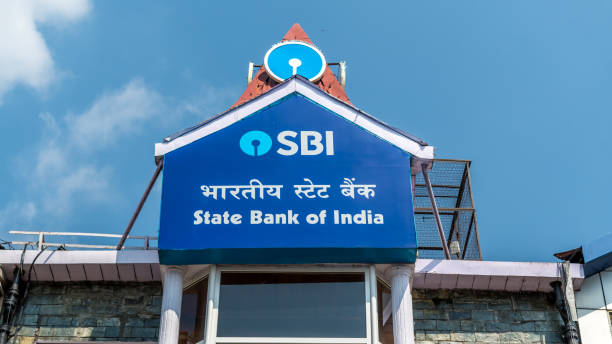
State Bank of India is India’s largest bank by a huge margin. Its standalone total assets reached Rs 76.23 lakh crore as of March 31, 2026, up more than 14% from the previous year.
The scale becomes even clearer when deposits and lending are considered. SBI ended FY26 with deposits of about Rs 59.76 lakh crore and advances of more than Rs 49 lakh crore. Its net profit for the year rose to around Rs 80,032 crore, making it not only the largest bank in the country but also one of its most profitable financial institutions.
SBI’s strength comes from its unmatched reach across retail banking, corporate lending, agriculture, government business, international banking and digital services. Its extensive branch network and huge customer base give it a presence in parts of India where few private banks can match its physical reach.
2. HDFC Bank – Total Assets: Rs 43.65 Lakh Crore
HDFC Bank is India’s largest private-sector bank and the second-largest bank overall, with a balance-sheet size of about Rs 43.65 lakh crore at the end of FY26.
The bank’s scale increased dramatically after the 2023 merger with HDFC Ltd, which brought a large mortgage portfolio onto its balance sheet. By March 2026, deposits had risen to about Rs 31.05 lakh crore and advances to roughly Rs 29.37 lakh crore.
HDFC Bank reported FY26 profit after tax of about Rs 74,671 crore and maintained a low gross NPA ratio of 1.15%. Its strength lies in a broad retail franchise, strong corporate banking operations, credit cards, vehicle finance, mortgages and an increasingly digital distribution system. It remains the clear private-sector leader by assets.
3. ICICI Bank – Total Assets: Rs 23.73 Lakh Crore
ICICI Bank ranks third with standalone total assets of about Rs 23.73 lakh crore as of March 31, 2026.
The bank closed FY26 with deposits of nearly Rs 17.95 lakh crore and a loan portfolio of about Rs 15.54 lakh crore. Profit after tax reached Rs 50,147 crore for the year, while the net NPA ratio was just 0.33%, reflecting one of the strongest asset-quality profiles among large Indian banks.
ICICI Bank has built a balanced business across retail loans, mortgages, business banking, rural finance, corporate lending, wealth management and digital services. It has also continued to expand its physical network, crossing 7,500 branches by the end of FY26. Its combination of scale, profitability and strong asset quality keeps it firmly among India’s banking leaders.
4. Bank of Baroda – Total Assets: Rs 20.09 Lakh Crore
Bank of Baroda is the second-largest public-sector bank in this ranking, with total assets of about Rs 20.09 lakh crore at the end of FY26.
Its global business crossed Rs 30 lakh crore during the year, with deposits reaching about Rs 16.48 lakh crore and global gross advances around Rs 14.30 lakh crore. The bank reported FY26 net profit of Rs 20,021 crore.
Bank of Baroda’s scale reflects both its domestic reach and its international operations. The mergers with Vijaya Bank and Dena Bank significantly expanded its customer base and balance sheet, while the bank has continued to strengthen retail, MSME, agriculture and corporate lending. Its overseas network also gives it a broader international presence than many Indian public-sector peers.
5. Punjab National Bank – Total Assets: Rs 19.86 Lakh Crore
Punjab National Bank follows closely behind Bank of Baroda, with total assets of about Rs 19.86 lakh crore in FY26.
PNB’s global business reached roughly Rs 29.70 lakh crore, while deposits stood at about Rs 17.11 lakh crore and global advances at Rs 12.59 lakh crore. The bank reported a net profit of Rs 16,904 crore for FY26.
Its scale was strengthened by the merger of Oriental Bank of Commerce and United Bank of India in 2020. Today PNB operates more than 10,000 domestic branches and remains one of India’s most important public-sector lenders. The bank has also made substantial progress in cleaning up its balance sheet, with gross and net NPA ratios falling sharply from the levels seen several years ago.
6. Axis Bank – Total Assets: Rs 18.87 Lakh Crore
Axis Bank ranks sixth overall and is India’s third-largest private-sector bank by balance-sheet size. Its total assets stood at about Rs 18.87 lakh crore as of March 31, 2026.
The bank reported deposits of about Rs 13.36 lakh crore and net advances of Rs 12.34 lakh crore. FY26 profit after tax was Rs 24,457 crore. Axis also ended the year with a gross NPA ratio of 1.23%.
Axis has expanded rapidly across retail, SME and corporate banking and has strengthened its premium customer and credit-card businesses following the acquisition of Citibank’s Indian consumer operations. Its distribution network reached 6,275 branches at the end of FY26, giving it a sizeable physical presence alongside its digital banking platforms.
7. Canara Bank – Total Assets: Rs 18.83 Lakh Crore
Canara Bank is only slightly smaller than Axis Bank, with standalone total assets of about Rs 18.83 lakh crore at the end of FY26.
The Bengaluru-headquartered public-sector lender reported global business of around Rs 28.06 lakh crore. Global deposits were about Rs 15.69 lakh crore, while gross advances crossed Rs 12 lakh crore. Full-year net profit rose to about Rs 19,187 crore.
Canara Bank’s size increased substantially after its 2020 merger with Syndicate Bank. It now operates a large nationwide network with more than 10,000 branches and a strong presence in retail banking, agriculture, MSME finance and corporate lending. The bank has also continued to improve asset quality, with its gross NPA ratio falling to 1.84% by March 2026.
8. Union Bank of India – Total Assets: Rs 15.69 Lakh Crore
Union Bank of India ranks eighth with total standalone assets of approximately Rs 15.69 lakh crore at the end of FY26.
Its total business reached around Rs 23.86 lakh crore, with deposits of about Rs 13.07 lakh crore. The bank reported FY26 net profit of Rs 18,697 crore, while gross NPA declined to 2.82% and net NPA to 0.48%.
Union Bank became significantly larger after Andhra Bank and Corporation Bank were merged into it in 2020. The combined institution has a broad national footprint and serves retail, agriculture, MSME and corporate customers. Its improved profitability and declining bad-loan ratios have strengthened the financial position of one of India’s largest state-owned banking franchises.
9. Bank of India – Total Assets: Rs 11.63 Lakh Crore
Bank of India ranks ninth with standalone assets of approximately Rs 11.63 lakh crore as of March 31, 2026.
The Mumbai-headquartered public-sector bank has a long history dating back to 1906 and operates across retail, corporate, international and treasury banking. Its FY26 net profit increased to about Rs 10,527 crore, up more than 14% from the previous year.
Bank of India is smaller than the large post-merger public-sector banks above it, but it still maintains a significant national network and international presence. Continued growth in loans and deposits, stronger profitability and improved asset quality have helped the bank rebuild its financial position after the stressed-asset cycle that affected many state-owned banks in the previous decade.
10. Indian Bank – Total Assets: Rs 9.88 Lakh Crore
Indian Bank completes the Top 10 with total assets of about Rs 9.88 lakh crore at the end of FY26.
The Chennai-based lender reported global deposits of roughly Rs 8.28 lakh crore and gross advances of about Rs 6.67 lakh crore. Total business approached Rs 14.95 lakh crore, while net profit rose 11.3% to around Rs 12,156 crore.
Indian Bank became a much larger institution after Allahabad Bank was merged into it in 2020. It now operates more than 6,000 domestic branches and has a strong presence in retail, agriculture, MSME and government-linked banking. Its net NPA ratio fell to just 0.15% in FY26, giving it one of the lowest reported net bad-loan ratios among major public-sector banks.
What Does ‘Largest Bank’ Mean?
Bank rankings can look very different depending on the metric used. Total assets measure the overall balance-sheet size, while deposits show how much money customers have placed with the bank. Market capitalization reflects what investors believe a listed bank is worth, and profit measures earnings rather than size.
That is why a bank such as HDFC Bank can have a much higher stock-market value than some public-sector banks even though SBI remains far larger by total assets. Similarly, a bank with a very large branch network is not automatically larger by balance sheet.
For this article, total standalone assets as of March 31, 2026 are used throughout because they provide the most consistent way to compare the core banking entities.
Final Word
India’s banking system in 2026 is led by three institutions that stand well above the rest in scale. SBI remains in a league of its own with assets above Rs 76 lakh crore, HDFC Bank dominates the private sector at more than Rs 43 lakh crore, and ICICI Bank holds a strong third position.
Below them, the competition is much tighter. Bank of Baroda, PNB, Axis Bank and Canara Bank all operate balance sheets between roughly Rs 18.8 lakh crore and Rs 20.1 lakh crore. The ranking also shows the lasting impact of India’s bank-merger programme, which transformed PNB, Canara Bank, Union Bank and Indian Bank into much larger national institutions.