

Managing logistics has become a critical challenge for growing businesses. Orders move across cities, warehouses handle fluctuating volumes, and customers expect accurate deliveries every time. Small gaps in coordination can quickly lead to delays, higher costs, and dissatisfied buyers.
To stay efficient, companies need a dependable logistics approach that reduces operational pressure while improving delivery performance. This is where professional logistics support becomes essential for maintaining control and consistency across supply chains.
A reliable 3PL (Third-Party Logistics) model enables businesses to outsource storage, fulfillment, and transportation to specialists. Let’s understand how outsourcing logistics works and why it can simplify operations.
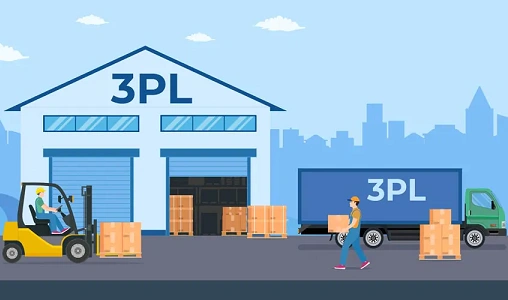
What is 3PL (Third-Party Logistics) and How Does it Support Business Operations?
Third-Party Logistics refers to outsourcing logistics functions to an external provider that manages key supply chain activities. These services typically include warehousing, inventory management, order fulfillment, transportation, and returns handling.
By relying on a specialized provider, businesses reduce the burden on internal teams and avoid the heavy investment in logistics infrastructure. Working with a trusted 3PL partner enables companies to centralize logistics under a single, coordinated system.
This improves visibility across inventory levels, order movement, and delivery timelines. As a result, businesses can maintain operational consistency while responding more quickly to customer demands across multiple markets.
How 3PL Providers Simplify Complex Business Operations at Scale?
Outsourced logistics plays a major role in reducing operational complexity. With the right setup, businesses can handle growth, demand shifts, and geographic expansion without adding internal strain.
1. Centralized Inventory Management for Better Stock Control
A professional 3PL partner offers centralized inventory tracking across warehouses and fulfillment centers. This setup minimizes stock mismatches, reduces overstocking, and prevents missed orders.
Businesses gain accurate, real-time visibility that supports better planning and purchasing decisions, improves demand forecasting, and reduces manual inventory reconciliation across locations.
2. End-to-end Warehousing and Order Fulfillment Services
From storage to picking, packing, and dispatch, fulfillment becomes a unified process. A capable 3PL partner manages these steps with standardized workflows that improve accuracy.
Orders move faster through the system, reducing errors and ensuring consistent delivery quality for customers, even during high-volume sales periods or regional demand spikes.
3. Faster Shipping and Reliable Delivery Performance
Speed and reliability are critical for customer satisfaction. Outsourced logistics providers manage optimized delivery routes and carrier coordination. This helps businesses meet delivery timelines consistently while maintaining service reliability across regions and order volumes, supporting service-level agreements and improving on-time delivery performance metrics.
4. Reduced Logistics Costs Through Shared Infrastructure
Instead of maintaining private warehouses or delivery fleets, businesses benefit from shared resources. Outsourcing logistics lowers fixed costs and converts them into predictable operational expenses. Consequently, this helps companies manage budgets more effectively while avoiding long-term investments in storage facilities, vehicles, and workforce expansion.
5. Scalable Logistics Support for Seasonal and Business Growth
Demand often fluctuates during peak seasons or promotional periods. A scalable logistics setup allows businesses to handle higher order volumes without adding internal staff or infrastructure. This ensures that service quality is maintained during growth phases while responding quickly to market demand and sales surges.
6. Technology-enabled Logistics With Real-time Tracking
Modern logistics providers use integrated systems for tracking, reporting, and performance monitoring. These tools give businesses visibility into shipments, inventory movement, and delivery status, supporting better decision-making and enabling faster issue resolution through data-driven insights and alerts.
7. Consistent Customer Experience Through Reliable Logistics Execution
Reliable logistics ensures customers receive orders on time and in good condition. Consistent fulfillment strengthens brand trust and encourages repeat purchases, making logistics performance a key contributor to customer satisfaction and long-term brand loyalty across sales channels.
Make 3PL Your Next Strategic Move for Operational Efficiency
Choosing the right logistics strategy directly impacts operational efficiency, delivery reliability, and customer trust. Partnering with a dependable 3PL provider gives businesses access to established networks, advanced handling systems, and consistent service quality.
With coverage of 96% of India’s population and more than 15,300 PIN codes, brands like DTDC can handle shipments efficiently across India. They also connect to over 220+ destinations globally, ensuring customers are reached reliably. Professional logistics support strengthens supply chains, reduces operational pressure, and ensures timely deliveries.
Working with an experienced 3PL partner also provides flexibility, cost control, and dependable execution. This allows businesses to focus on growth, innovation, and customer satisfaction, while logistics experts manage the complexities of transportation and delivery.